For B2B importers, cosmetic brands, and wholesale distributors in North America, Europe, and the Middle East, sourcing premium henna is a high-stakes decision. The global market is filled with low-grade powders mixed with green sand, chemical dyes, or stale crops from previous years. When buying in multi-ton quantities, a single bad batch can ruin your brand's reputation and result in expensive regulatory rejections.
This handbook outlines the exact technical standards and field tests required to identify and secure premium-grade wholesale henna powder.
1. Key Technical Quality Indicators
Professional importers should always demand a Certificate of Analysis (CoA) confirming the following parameters:
| Parameter | Standard Limit | Implication |
|---|---|---|
| Lawsone Content | > 2.2% (Up to 3.0%) | Determines the depth of stain and quality |
| Moisture Content | < 8.0% | Prevents mold growth during ocean transit |
| Sieve Mesh Size | 100 mesh to 300 mesh | High mesh (300) represents Body Art Quality (BAQ) |
| Heavy Metals | Lead < 10ppm, Arsenic < 2ppm | Essential for FDA and EU compliance |
2. The Triple-Sifting Sieve Test
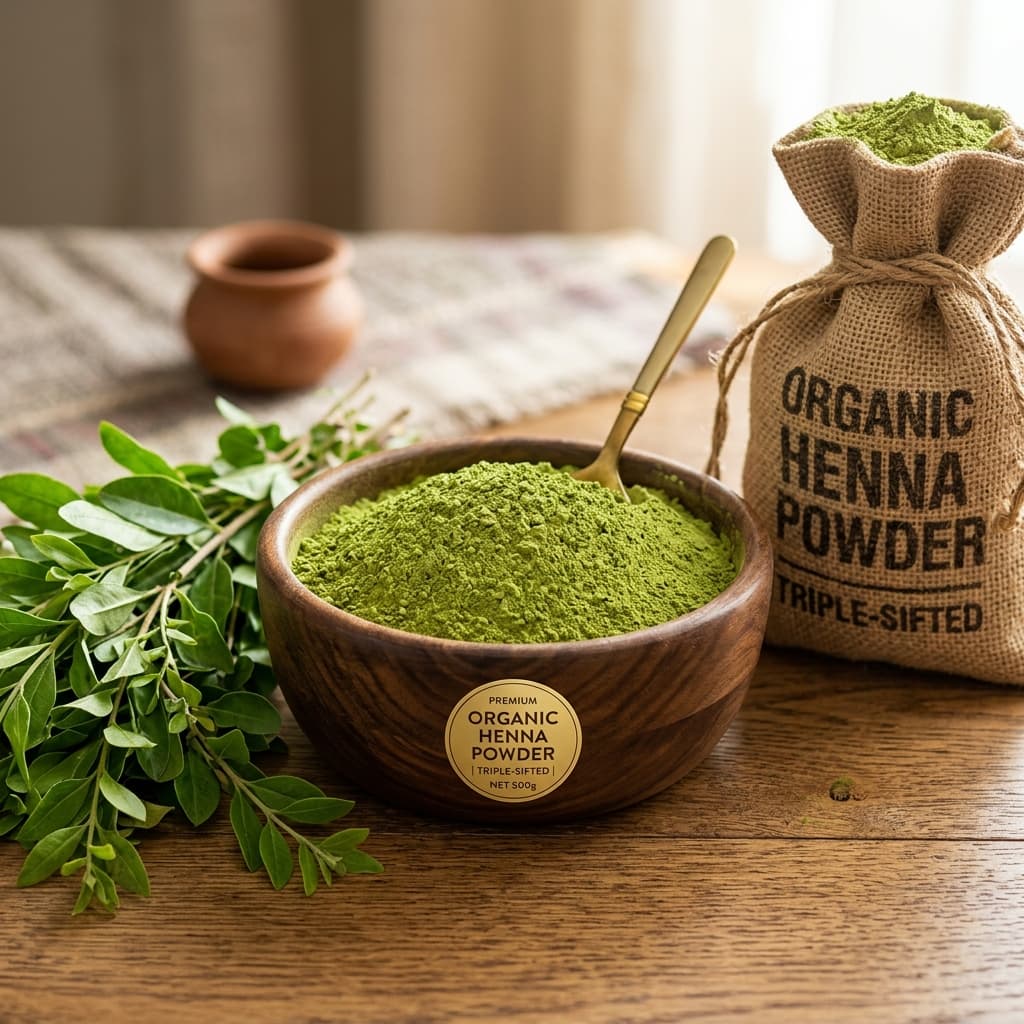
Always enquire if the supplier uses a mechanical air-classifier or traditional sieves. Premium suppliers like Herbalexia use high-frequency vibratory screen separators to process the powder through 300-mesh screens. This removes all botanical waste and impurities. Low-mesh powders (under 100 mesh) retain gritty sand and leaf stems, which feel abrasive and make application difficult for customers.
3. Spotting Adulteration: The Simple Water Dispersion Test
You can quickly identify adulteration in a small sample with this easy bench test:
- Take a clear glass of lukewarm water and sprinkle one teaspoon of henna powder on the surface.
- Pure Henna: Will float briefly, then slowly absorb water and sink to the bottom as soft, organic clumps, leaving the water clear or slightly straw-colored.
- Chemical/Sand Adulterants: Heavy sand or mineral dyes will plummet to the bottom immediately, while chemical colorants (like sodium picramate or green dye) will bleed trails of bright green or red color through the water within seconds.
"Genuine henna requires at least 4 to 6 hours of resting time to naturally release its dye molecule (lawsone). Any powder that colors water immediately contains added chemical colorants."
4. Crucial Organic Certifications
When clearing customs in the US and the EU, certified organic paperwork is highly advantageous. Importers should check if the supplier's processing facilities hold certifications such as:
- USDA Organic & OneCert: Validates zero chemical pesticide usage.
- GMP (Good Manufacturing Practices): Ensures strict sanitary controls during milling and packing.
- ISO 9001:2015: Confirms international quality management systems.
At Herbalexia, we support our B2B partners by providing fully certified organic batches, complete export documentation, vacuum-sealed packaging to preserve freshness, and direct shipping logistics from Indian ports to your warehouse. Sourcing premium henna requires vigilance, but partnering with a transparent, certified exporter ensures a consistent, high-purity supply that keeps your customers returning.