
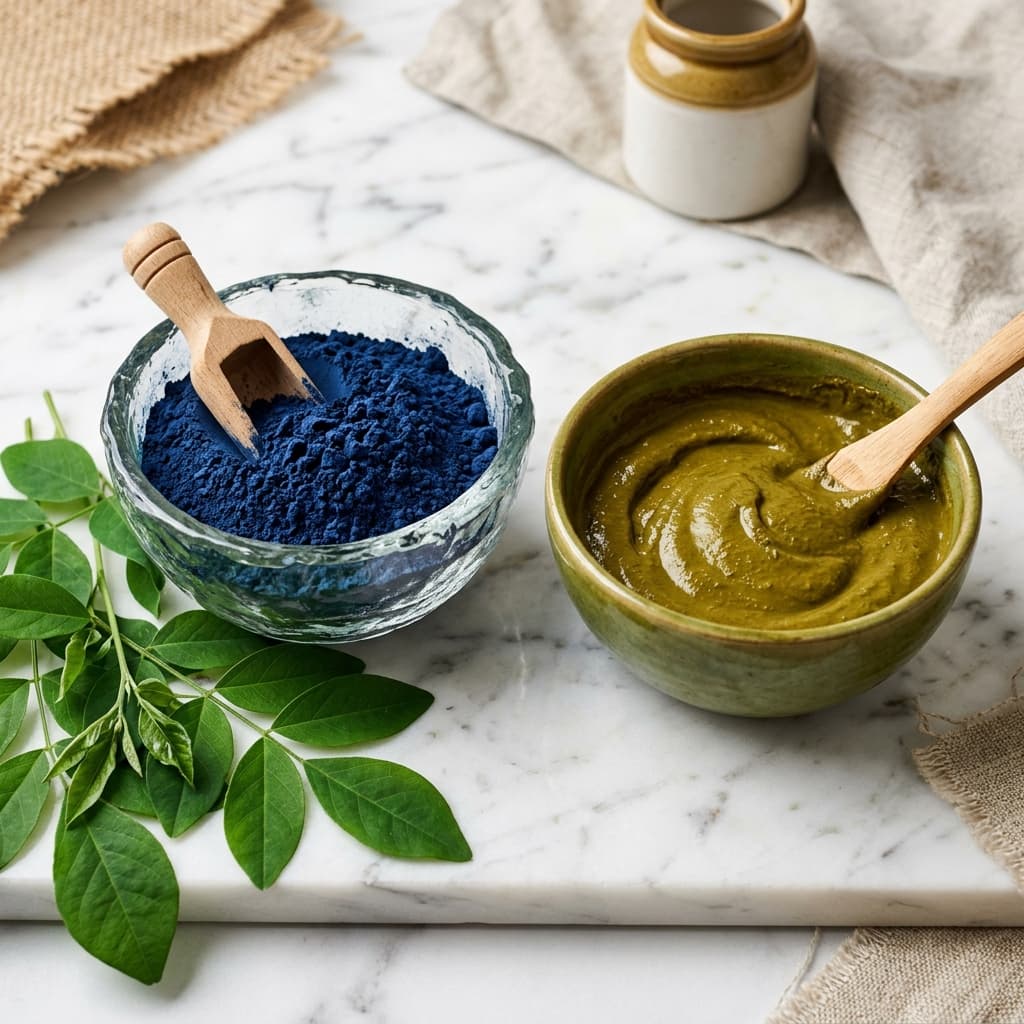
Are you looking for a way to color your hair jet-black without using toxic chemical dyes containing PPD or coal tars? Look no further than Indigo powder (Indigofera tinctoria). While many attempt to use indigo and end up with uneven coverage or greenish tints, the secret to success lies in understanding the science of the double-process technique.
Today, we reveal the professional method for achieving a gorgeous, rich black shade using 100% pure organic henna and indigo.
The Botanical Science of Indigo
Indigo powder is made from the leaves of the Indigofera tinctoria plant. Unlike henna, which contains the red lawsone dye, indigo leaves contain a colorless glucoside called indican.
When indigo leaves are harvested, fermented, dried, and ground, the indican molecules are preserved. When you mix indigo powder with warm water, the glucoside breaks down to release indoxyl. When applied to your hair, indoxyl oxidizes upon contact with oxygen in the air, transforming into a deep, rich blue dye (indigotin).
However, indigo molecules have a difficult time binding directly to raw hair keratin. This is where henna becomes the essential foundation.
Why You Must Apply Henna First
The biggest mistake people make is applying indigo powder alone onto grey or light hair. This results in a weak, translucent blue-green stain. Indigo requires a base layer to hold onto.
Henna's red dye (lawsone) binds perfectly to hair keratin. When you apply indigo over a fresh layer of henna, the blue indigo dye blends with the red henna dye. According to color theory, mixing deep blue and warm red yields a beautiful, rich black. Furthermore, the indigo molecules bind tightly to the lawsone layer, ensuring a long-lasting, deep color.
"Think of henna as the essential primer coat, and indigo as the final rich color coat. Together, they create a natural, chemical-free black shade that is unmatched in depth and shine."
The Step-by-Step Double-Process Method
Follow this exact method for outstanding, professional results:
Step 1: The Henna Base (Day 1 or Morning)
- Mix 100g of pure Herbalexia Henna Powder with warm water and let it rest for 4 hours to release the dye.
- Apply the paste to clean, dry hair. Cover with a shower cap and leave it on for 2 hours.
- Rinse thoroughly with water only (do not use shampoo). Your hair will now be a bright copper-red. Do not worry; this is the essential base layer!
Step 2: The Indigo Application (Immediate or Next Day)
- Mix 100g of pure Indigo Powder with warm water and a pinch of salt (salt helps open the hair cuticle slightly to absorb the dye). Note: Mix indigo immediately before use; it does not need a long resting time and will lose its dye potency if left standing.
- Apply the indigo paste immediately to your freshly hennaed hair.
- Cover with a shower cap and let it sit for 1.5 to 2 hours.
- Rinse thoroughly with warm water. Avoid shampooing for 48 hours to allow the indigo to fully oxidize and settle into a deep, lustrous jet-black shade.
Essential Tips for Indigo Success
- Always Use Fresh Powder: Indigo is highly sensitive to air. Once opened, store it in an airtight container in a cool, dark place, and use it within 3 months.
- Never Mix Boiling Water: Extreme heat destroys the delicate indigo dye enzyme. Use warm water (about 50°C).
- Patience is Key: The color will continue to darken and rich black tones will fully develop over 24-48 hours as the air oxidizes the natural pigments.
By following this authentic double-process technique, you can say goodbye to toxic chemical dyes and embrace a safe, organic route to beautiful, healthy black hair.